Needles next to pencils
Knitting can be in any school
I teach knitting to kids in a public school, and I'm writing the curriculum that lets any teacher do the same. This page is the why — and the endowment that funds the how.
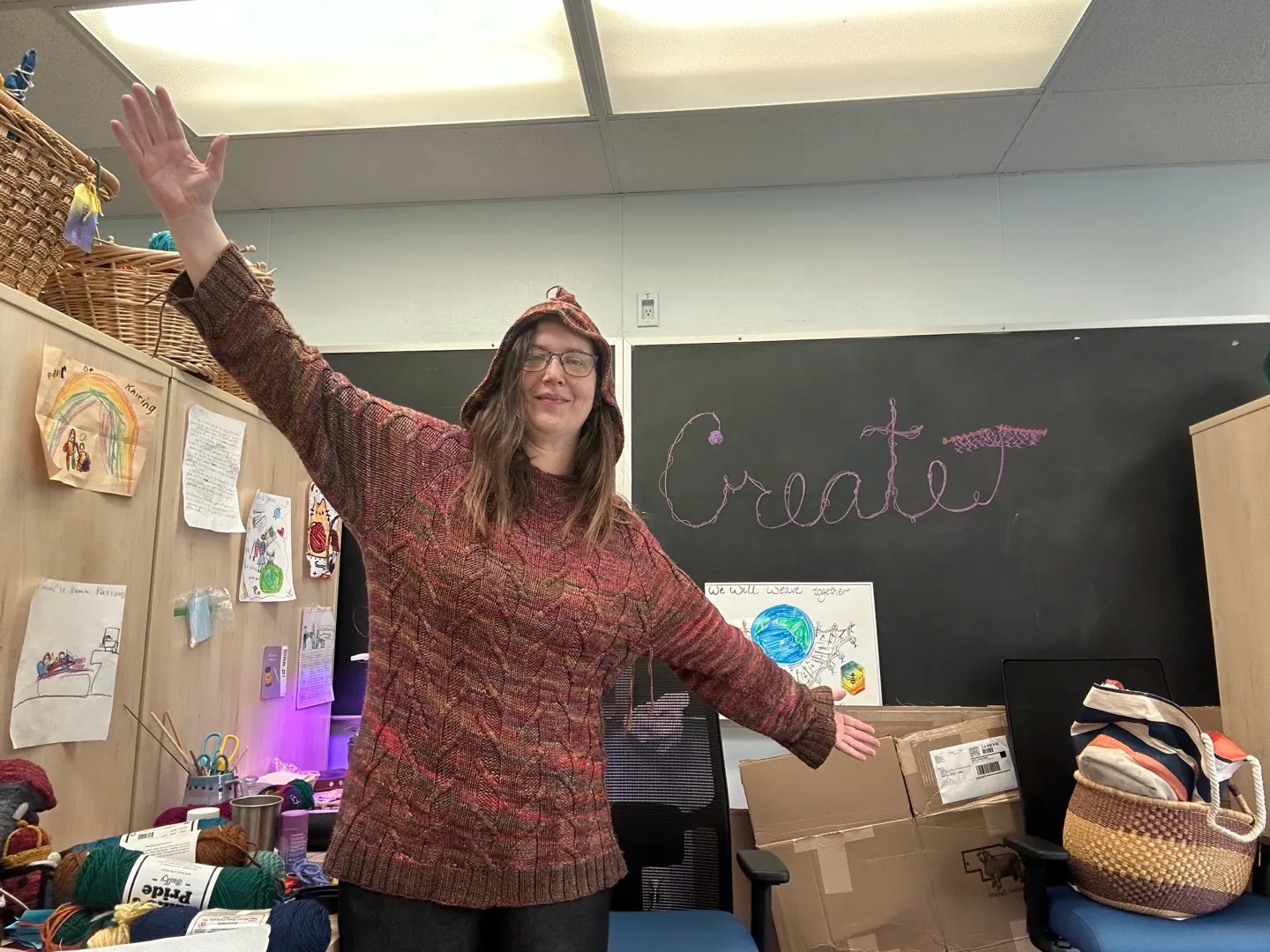
What a pair of needles can do
Capable Hands
Knitting builds the fine motor control behind handwriting, drawing, lab work and instrument playing. I’m grows nerve endings and neurons.
A quieter nervous system
The rhythm of knitting teaches young bodies to focus. The cross body motion helps regulate systems. All important skills.
Math you can hold
Counting stitches is arithmetic. Reading a pattern is algebra. Shaping a hat is geometry.
Someone who finishes things
A scarf takes weeks. A kid who finishes a scarf knows they can do hard, slow things — and that belief transfers to everything else they try.
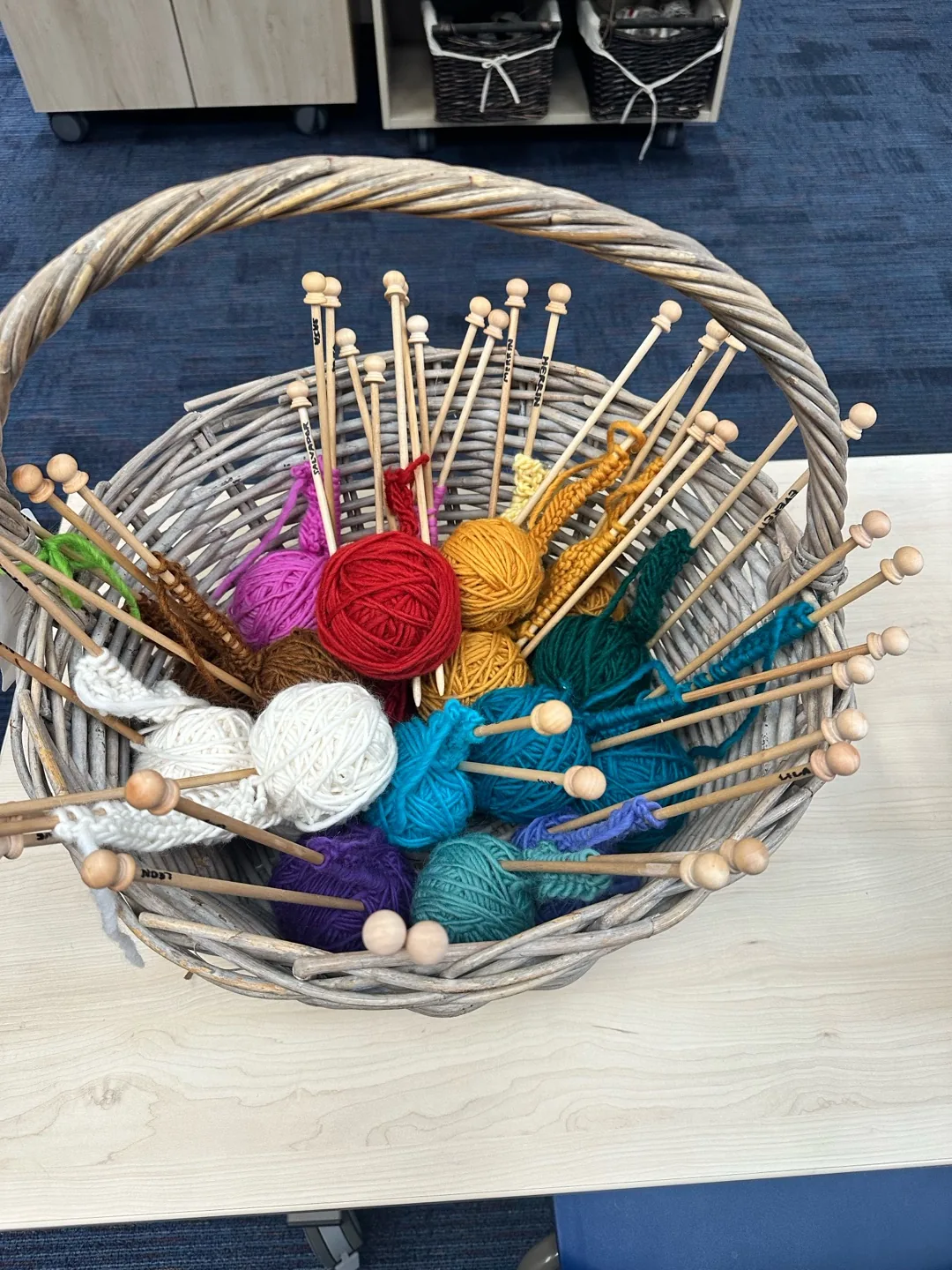
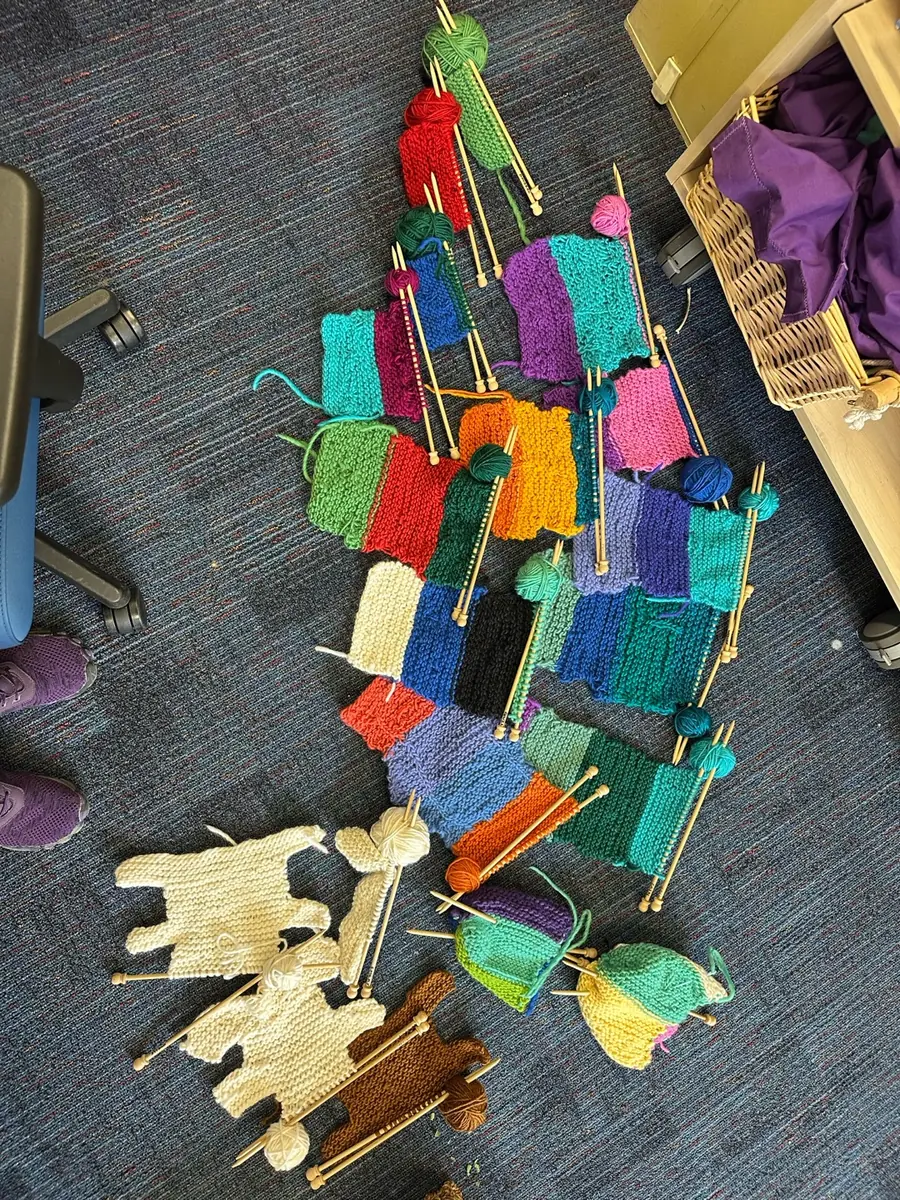
The receipts
This isn't just a fun idea — it's science
For administrators, boards and grant committees, here's the actual research:
Want to go deeper? The Yarnfulness Project is an ongoing science-engagement project studying exactly this.
A curriculum any teacher can pick up
The curriculum I'm writing assumes zero experience and a public school budget:
- Adaptable lesson plans for the time and resource available.
- Supply lists for classroom budget
- A few tricks of the trade
- Rubrics for administrators
- Free to any school once it’s up.
"Kids who knit are more focused, better at reading, writing and math — and they grow into better humans. That’s science!"
— Miss Kiki
For the administrators
The standards, and what standards can't measure.
Social-emotional learning
Aligned with the CASEL framework that most state SEL standards are built on:
Self-management. Frog your own mistake, breathe, start the row again. Frustration tolerance with actual yarn stakes.
Self-awareness. Kids notice what frustration and calm feel like in their bodies — and that they can move between them.
Relationship skills. Knitting circles are peer tutoring in disguise: fixing a neighbor's dropped stitch is collaboration, not cheating.
Social awareness. Making things for others — preemie hats, shelter scarves — turns crafting into empathy.
Responsible decision-making. Choose your pattern, live with your gauge. Planning, sequencing, and owning the outcome.
Academic standards
Every lesson in the curriculum lists its alignment. Knitting touches Common Core more often than you'd think:
Math. Counting & cardinality, skip counting, multiples in pattern repeats, measurement, and the geometry of shaping a hat.
ELA. Reading and following multi-step procedural text, domain vocabulary, and the speaking & listening of group work.
Fine motor. The hand strength and bilateral coordination that handwriting standards quietly assume.
And the part no rubric measures: the joy.
A kid holding up a lumpy, glorious first square and yelling "LOOK WHAT I MADE" is the whole point. The calm is real, the standards are real — but the joy is why they beg to come back.
The Knitting in Schools Endowment
A fund that keeps giving, year after year
An endowment is a fund that keeps giving. The principal stays invested and the earnings pay for knitting supplies, curriculum printing, and teacher training year after year — long after any single fundraiser is forgotten.
This endowment can be turned over to the guild if it works.
Goal: $500,000 to establish the endowment — then its earnings maintain it forever.
Contribute
Endowment gifts fill the endowment right now, but eventually I hope to turn it over to our nonprofit at the school